The Food Revolution
Home Page The Food Revolution Our Food Our Future Books/Resources About John Robbins Ask John (Q&A) About EarthSave About YES! About VegSource Other Organizations Contact Us View Cart
Search for:


Join John Robbins' Mailing List
Email:
How YOUR DIET Can Help Save Your Life and the World


Ask John

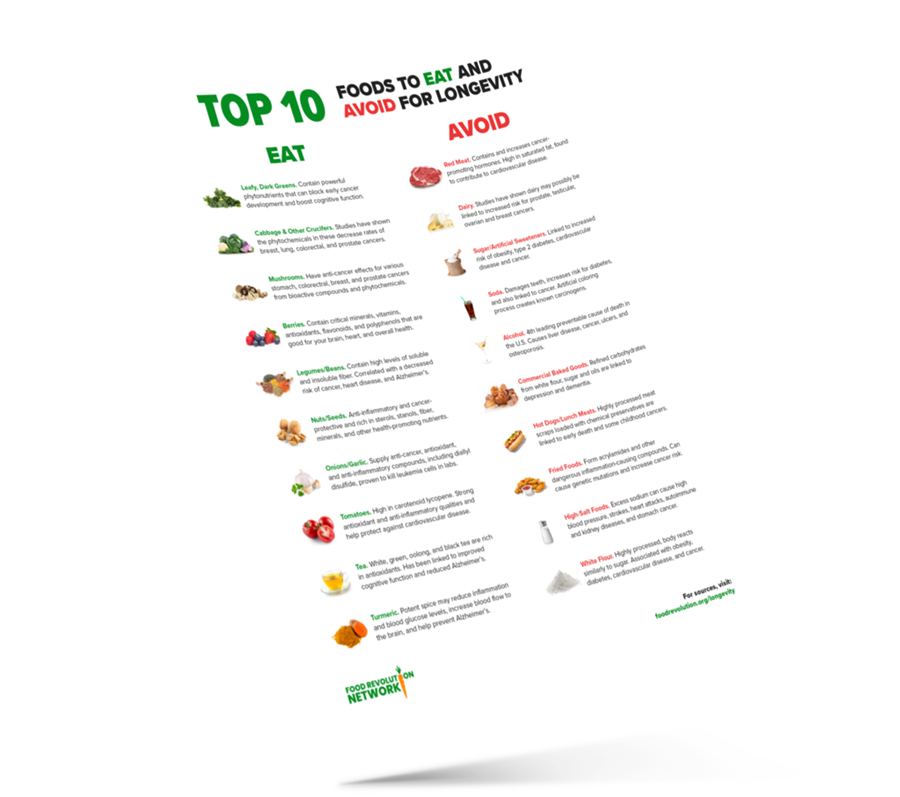
What about dairy products from well treated cows?

Dear John,

I don't think about milk, butter, ghee, cheese, etc. the same way I think about meat and eggs. In fact I feel that cows are sacred animals that create sattvic foods--not just for baby cows, but for us. I have lived most of my life through my intuition, and though most people would not feel this is a valid way of living, I find that the only time I make mistakes is when I don't listen to myself-- but nothing about dairy makes me feel that I am violating natural law by eating it, as I do with all other animal products. I've been a vegetarian since 1975.

If the cows are treated with kindness and respect, I'm sincerely interested in understanding whether you feel dairy products would be okay. I'm referring only to organic dairy products that come from farms that are run the way you and I would want them to be run.

I asked (a leading animal rights philosopher) the same question, but he became so angry that there was no room for discussion.

I ask you this because I feel a deep connection with you.

Thanks John,

Laura

Dear Laura,

I respect people who follow their intuition. If our culture had more respect for intuitive and emotional intelligence we’d all be the better for it.

Would dairy products be okay if the cows were treated well? This is something of a hypothetical question, because the reality today is so tragically different. I don’t want us to forget that virtually all American dairy products come from cows who are treated horrendously. My primary concern is with the commercial dairy industry, the folks who inject genetically engineered BGH into cows that have already been bred to give 20 times more milk than they naturally would, the folks who spend hundreds of millions of dollars telling you that you need their products to keep your bones healthy, when in fact there are far better sources of calcium and the other minerals your bones need. (Green leafy vegetables, for example, provide calcium that is far more bio-available than dairy products.)

The organic dairy industry isn't, I'm sad to say, as much better as you or I would want. The Colorado organic milk company, Horizon, refers to itself as the "Horizon family of companies." The word "family" connotes pastoral family farms, but the truth here is quite different. Horizon is a $127 million corporation that controls 70% of the retail market in organic dairy products in the United States. Many Horizon milk products are now "ultrapasteurized," a process the cartons present as a boon to the consumer (it greatly extends the "use by" date), but which is really done to allow the company to ship its milk all over the country. Hence "organic" milk in the US today is rarely locally produced.

There is evidence that "ultra-pasteurization," a very high-heat process, alters substances in the milk and creates milk that is less nutritious than conventionally pasteurized milk. So, ironically, the consumer buying organic milk today in the United States is getting a product that may actually be worse on at least two counts than conventional milk. It may well have been ultra-pasteurized, and it has probably been shipped long distances, making it environmentally more damaging. On the other hand, it won't be from cows treated with bovine growth hormone, and most likely won't contain pesticide residues.

The dairy industry would like consumers to believe that their cows are happy and well treated. This is why, in 2001, the California Milk Advisory Board initiated a widespread advertising campaign featuring "Happy Cow" commercials. The ads show healthy, cheerful cows who enjoy plenty of green grass, sunlight, and space, along with the slogans, "Happy cows make great cheese," and "Great cheese comes from happy cows - Happy cows come from California." In response, the animal protection organization, Last Chance For Animals, asked the California Attorney General's Office for an injunction against the California Milk Advisory Board for false advertising. The group is seeking a public retraction, and criminal penalties against the company. In contacting the Attorney General, the animal protection group presented photographs of actual cows taken at California dairy farms which are members of and fund the California Milk Advisory Board. These photos show cows knee deep in mud, feces and urine, and unable to graze - a far and painful cry from the "happy cows" displayed in the ads.

Is organic milk any different? You and I would hope that organic milk would come from well-treated cows that actually graze on grass. Horizon Dairies goes to tremendous lengths to present consumers with images of Horizon cows as happy. The company's logo is a cow leaping with glee. The company's newsletter is called The Happy Cow Herald. And the Horizon Education Center in Maryland is home to an enormous maze covering over 7 acres of land and 3.5 miles of trail, that depicts the company's Happy Cow logo.

But the truth is, once again, quite different from the PR. Cows at Horizon's dairies rarely if ever eat a blade of grass. They spend their days confined to a fenced dry lot, eating organic grains, and tethered to milking machines three times a day.

Dairy products are sometimes touted as good sources of the important Omega-3 essential fatty acids. But Horizon products, like all milk, butter, and cheese from grain-fed cows, have far less of these essential nutrients than dairy products from pastured animals.

There's another problem with trying to produce dairy products in an "ideal" situation What would happen to the calves? Cows only lactate for a certain amount of time after giving birth. To keep producing milk, they've got to become pregnant again. So dairy cows give birth to quite a few calves over the course of time. In commercial practice, the calves are taken away at birth, the males destined via a hideously cruel process to become veal, and the females for milk production. What would you do with the males? It's always been a problem for those wanting dairy products but not wanting to kill animals.

Yet another issue is the breeds. Today's Holsteins have been bred relentlessly and exclusively for maximum production. They bear little resemblance to the Guernseys and Jerseys of yesteryear. The sattvic (holy and pure) milk that the ayurvedic texts refer to certainly did not come from animals resembling the Holsteins that today make up almost all of the US dairy herd.

I appreciate your question, but I'm afraid that it isn't so simple to produce dairy products in our culture today in a manner that "you and I would want." In traditional India, the cows roamed free and were milked by hand. The males were castrated (this turns a bull into a steer), and then used to plow the fields. The animals were revered. Their manure sweetened the soil, and was also dried and used as a cooking fuel, and even a building material. The animals were part of the ecosystem, part of the culture, part of the spirituality, and part of people's families. It can be painful to grasp how far we have strayed from a harmonious, credible, and sustainable relationship with these beautiful creatures.

John

Return to list of questions


Check out my newest website and blog JohnRobbins.info